



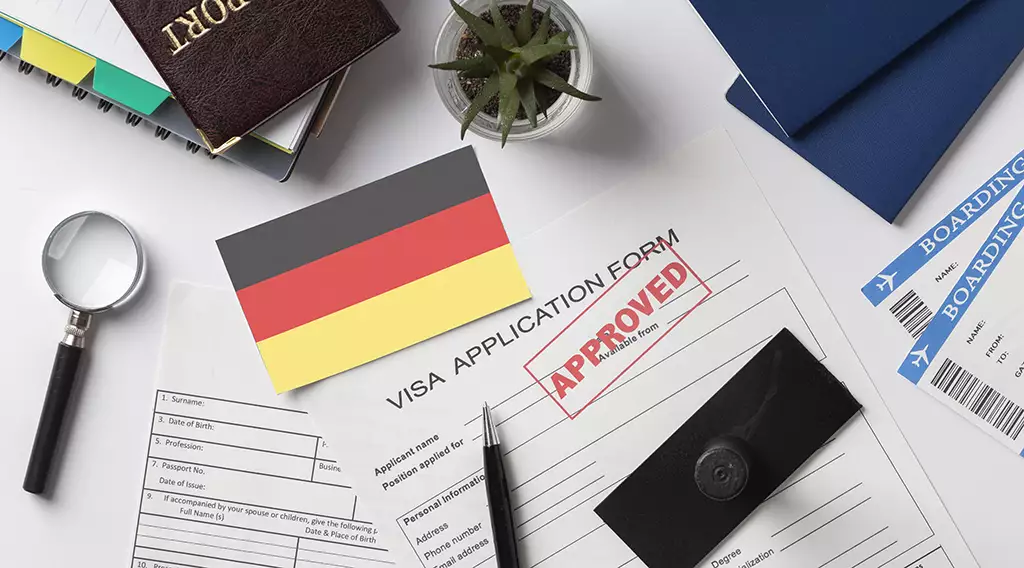
Germany tourist visa
Germany is one of Europe's most visited destinations, attracting travelers for leisure, business exploration, trade fairs, family visits, and cultural tourism. However, securing a Germany tourist visa requires far more than submitting basic documents. The Schengen evaluation system is structured, evidence-based, and highly compliance-driven. Applicants who approach the process strategically significantly improve their approval probability.
For serious travelers—especially professionals, business owners, and high-value applicants—the focus should be on risk mitigation, documentation alignment, and long-term travel credibility rather than merely fulfilling checklist requirements.
Germany tourist Visa framework
Germany issues short-term travel permissions under the Schengen Visa (Type C). This allows travel within Germany and other Schengen member states for up to 90 days within 180 days.
The visa is granted for:
- Tourism
- Visiting family or friends
- Business meetings and trade fairs
- Short-term cultural or professional visits
When applying for a Germany tourist visa, immigration authorities primarily evaluate whether the applicant qualifies as a genuine short-term visitor and whether there is a strong intention to return to their home country.
Who needs it?
Indian passport holders must obtain a Schengen visa before traveling to Germany. Therefore, applicants seeking a Germany tourist visa for Indian citizens must prepare a documentation-heavy file with financial transparency and a clear travel purpose.
Unlike some other destinations, Germany applies strict scrutiny to:
- Income consistency
- Travel history
- Employment stability
- Accommodation arrangements
- Insurance coverage
The visa officer's assessment is based on documentation credibility, not personal interviews alone.
Germany tourist Visa Eligibility standards
German consulates assess applications under three major risk categories:
- Financial sufficiency
- Purpose clarity
- Return assurance
There is no officially published minimum bank balance, but applicants must demonstrate sufficient funds to cover travel, accommodation, insurance, and daily expenses.
Below is a structured evaluation overview:
| Assessment Area | What Officers Examine | Risk Indicator |
|---|---|---|
| Financial Stability | 6 months of bank statements, tax returns | Sudden unexplained deposits |
| Employment | Leave a letter, proof of salary, and business registration | Inconsistent job history |
| Travel History | Previous Schengen or OECD travel | Overstays or refusals |
| Accommodation | Confirmed hotel or invitation letter | Unverified stay plans |
| Insurance | €30,000 minimum coverage | Missing or invalid policy |
This structured approach is central to the Germany tourist visa decision process.
Financial proof strategy
Financial documentation is one of the most common refusal grounds. Officers evaluate:
- Average balance over time
- Source of income
- Tax compliance
- Business revenue consistency
Large last-minute deposits without a supporting explanation create suspicion. The objective is not to show excessive funds but to show logical financial continuity.
For self-employed applicants, audited balance sheets and GST filings significantly improve credibility. Salaried professionals should provide salary slips, bank credits matching salary, and employer-approved leave confirmation.
Applicants often search for Germany tourist visa cost details; however, beyond the official visa fee, financial preparedness must also account for travel insurance, flight bookings, accommodation, and daily expenses.
Required documents
A strong application file should be structured, not bulky. Quality outweighs quantity.
Essential documentation includes:
- Valid passport
- Completed Schengen application form
- Travel itinerary
- Confirmed accommodation
- Travel insurance with a minimum of €30,000 coverage
- Bank statements (6 months)
- Income tax returns (if applicable)
- Employment or business proof
When you Apply For Germany tourist visa, document consistency across all papers is critical. Dates, income figures, and travel plans must align.
Processing timeline
Processing generally takes 15–30 working days, depending on season and embassy workload. During peak summer travel or festive periods, timelines may extend.
Early submission—at least 4–6 weeks before travel—is recommended. Delays often occur due to incomplete documentation, verification checks, or clarification requests.
The visa may be granted for:
- Single entry
- Double entry
- Multiple entry
Duration typically aligns with the travel itinerary but can extend longer for applicants with a strong travel history.
Frequent travelers with previous Schengen compliance may receive multi-year, multiple-entry visas. However, the cumulative stay must not exceed 90 days within a 180-day window.
Visa fees and total cost
The standard Schengen visa fee for adults is approximately €80. Children between 6–12 years pay reduced fees.
A structured cost overview is provided below:
| Expense Category | Estimated Cost Range |
|---|---|
| Visa Fee | €80 (approx.) |
| VFS Service Charges | Variable by location |
| Travel Insurance | Depends on coverage duration |
| Flight Reservation | Based on the airline |
| Accommodation | Based on the city and season |
While applicants frequently search for the Germany tourist visa cost, it is important to budget beyond the basic visa fee. Proper financial preparation supports credibility.
Common refusal reasons
Refusal under Schengen rules usually occurs due to:
- Insufficient financial proof
- Doubt about return intention
- Incomplete travel plan
- Lack of employment stability
- Unclear source of funds
One of the most cited refusal grounds is "justification for the purpose and conditions of the intended stay is not reliable." This indicates documentation misalignment rather than missing paperwork.
A strategically prepared Germany tourist visa application addresses potential concerns proactively.
Travel insurance importance
Travel insurance is mandatory under Schengen rules. The policy must:
- Cover a minimum of €30,000
- Include emergency medical coverage
- Be valid across Schengen states
- Cover the entire travel duration
Failure to meet these criteria leads to automatic refusal.
Multiple country travel
If Germany is your primary destination (longest stay), you must apply through the German consulate. If multiple countries are visited equally, the first point of entry determines jurisdiction.
Incorrect jurisdiction selection often results in application rejection without assessment.
Reapplication strategy
If refused, reapplication is possible. However, you must first analyze the refusal code issued by the consulate.
Effective reapplication requires:
- Strengthening financial evidence
- Clarifying employment ties
- Providing a detailed cover explanation
- Correcting inconsistencies
Simply resubmitting identical documents rarely succeeds.
Compliance matters
Once granted, compliance is crucial:
- Do not exceed the 90-day rule
- Avoid unauthorized employment
- Respect the declared travel purpose
Future Schengen applications depend heavily on prior compliance behavior.
A properly structured Germany tourist visa file builds long-term credibility for European travel and even future residence pathways.
How can Nexuscore help?
Securing a Schengen visa requires structured documentation, a financial presentation strategy, and compliance awareness. Nexuscore evaluates each profile for risk exposure, documentation gaps, and credibility alignment before submission.
As one of the Visa consultants In Noida, Nexuscore focuses on precision-based applications, refusal prevention, and long-term travel credibility to maximize approval probability while protecting your international travel record.
FAQ's
Yes. A Schengen visa issued by Germany allows travel across all Schengen member states, provided Germany remains your main destination or first point of entry as declared in your application.
Yes. Strong travel history to countries with strict immigration systems demonstrates compliance credibility. It positively influences the officer's risk assessment when evaluating return intent and behavioral reliability.
Confirmed non-refundable tickets are not mandatory. Many applicants provide flight reservations instead. The key requirement is a clear and realistic travel itinerary aligned with declared travel dates.
You can apply up to six months before travel. Submitting 4–6 weeks in advance is ideal, especially during peak seasons, to avoid delays and manage unexpected document verification requests.